
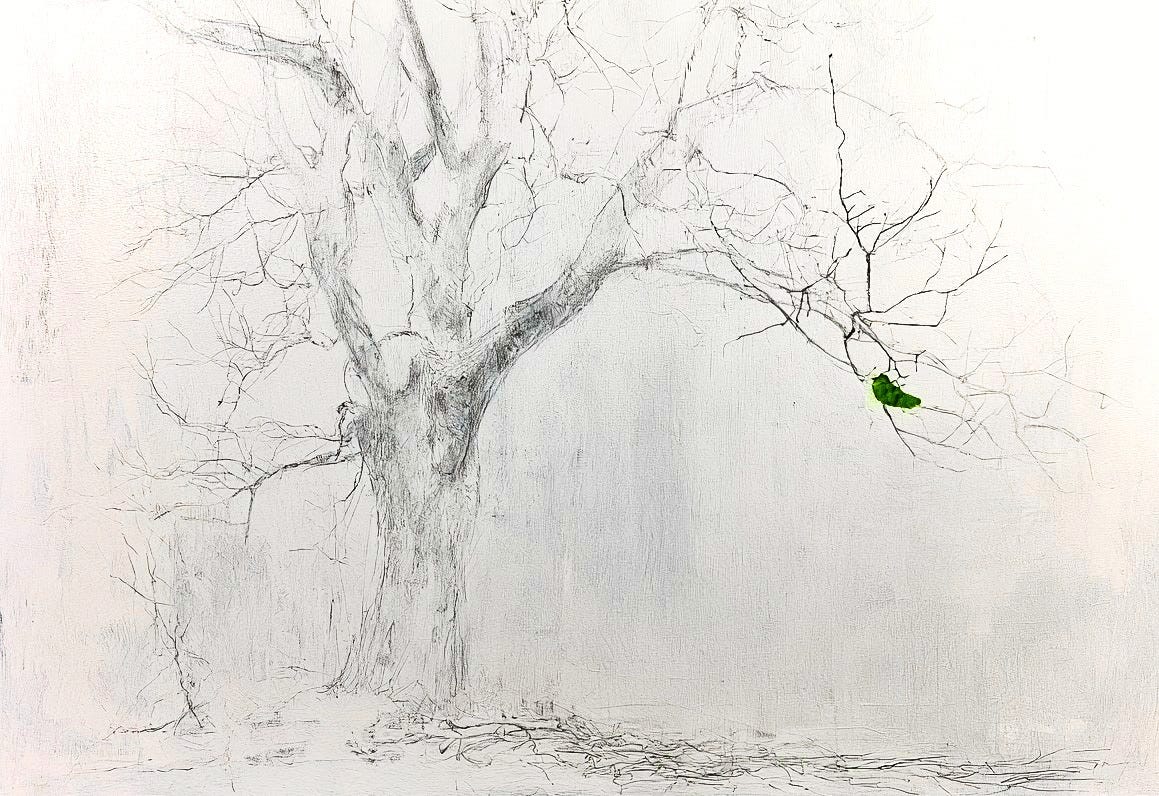
“Niggle was a painter. Not a very successful one, partly because he had many other things to do.”
This is J.R.R. Tolkien’s introduction to the main character in his strangely captivating short story “Leaf by Niggle.”1 The story opens with Niggle needing to take a long journey, though he can’t remember exactly why, and therefore having a limited time to complete his dream project: a large painting of a tree.
One distraction after another, multiplied by his own scattered nature, keeps Niggle from getting very far on his project. He has many other things to do, and he keeps getting interrupted by the pressing needs of others, especially his neighbor. So Niggle helps out as needed, neglecting his magnum opus as the days go by.
When the time for his departure comes — even though he knew it was coming, it surprises him, since he still isn’t sure of where he’s going or why — only one leaf of Niggle’s painting has been completed. It’s done well enough, for the sort of painter he is — he is fascinated by leaves and loves painting them — but the rest of the tree is so conspicuously missing that the city officials called upon to patch the neighbor’s roof want to use Niggle’s canvas to do so. And since it is time for Niggle to leave, he lets them.
Off Niggle goes into a pleasantly bucolic afterlife, which (though a bit purgatorial at first) is filled with open fields and beautiful vistas. As Niggle is riding along on his bicycle, he looks up and, to his astonishment, sees a tree — his tree. The one he envisioned as he was painting his leaf.
